About Shell & Tube Type Heat Exchanger
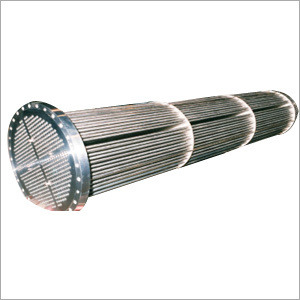
With sincere intentions to preserve and uplift our reputation in the market, we are manufacturing and exporting comprehensive assortment of Shell & Tube Type Heat Exchanger. Our offered range is manufactured in such a way that we are able to maintain universally accepted standards. The heat exchanger that we offer is most widely used in petroleum, process, HVAC and chemical industries. In addition, clients can avail this Shell & Tube Type Heat Exchanger from us in a wide range of specifications.
Features:
- Flawlessly finished
- Industry proven design
- Hassle free performance
Heat Exchanger
Heat Exchanger is device to enhance or facilitate the flow of heat. Heat Exchanger used to transfer heat between two or more steam of fluid. Tubular heat Exchanger is found in the great majority of application, primarily for historical and economic reason. They have been in use for a long time and are familiar to many engineers. Standard models are available in a wide range of capacities at reasonable cost, as are the custom made units found in oil refineries and chemical process plants and in the power industries.
The best know standard for tubular heat exchanger are the TEMA standards of the Tubular Exchanger Manufacturers Association, Which include a basic nomenclature and classification scheme for tube and shell heat exchanger.
Material Versatility and Robust DesignChoose from a comprehensive range of tube and shell materials, including stainless steel, titanium, copper, and brass, ensuring superior corrosion resistance and strength. With customizable tube arrangements and baffle types, our heat exchangers are adaptable to intricate process requirements and space constraints, guaranteeing efficiency and durability.
Efficient Performance Across IndustriesDesigned for demanding sectors like chemical, petrochemical, power, and food & beverage, our shell and tube exchangers provide reliable heat transfer solutions. With capacity up to 50 m/hr and working at temperatures of up to 350C, they excel in challenging environments, maximizing plant uptime and process efficiency.
FAQs of Shell & Tube Type Heat Exchanger:
Q: How do I select the appropriate tube and shell material for my application?
A: Material selection should be based on the fluids handled, process temperatures, and corrosion considerations. SS304 and SS316 are ideal for general and moderately corrosive applications, while titanium and copper suit highly corrosive or specialized processes. Mild steel or alloy steel shells are typically chosen for economical, non-corrosive duties.
Q: What are the benefits of triangular versus square pitch tube arrangements?
A: Triangular pitch offers higher heat transfer efficiency due to increased turbulence, making it suitable for fouling fluids. Square pitch enables easier cleaning and accommodates higher cleanliness requirements, which is beneficial in food and beverage or processes involving particulates.
Q: When should I opt for seamless tubes over welded tubes?
A: Seamless tubes provide superior strength and are preferred in high-pressure and high-temperature applications to minimize leak risk. Welded tubes are cost-effective and suitable for moderate service conditions where operational demands are less stringent.
Q: Where can Shell & Tube Type Heat Exchangers be installed?
A: These heat exchangers offer installation flexibility, supporting both horizontal and vertical mounting. They can be adapted to various site layouts in chemical plants, power stations, or food processing facilities, as per spatial and operational constraints.
Q: What is the process for customizing heat transfer area and dimensions?
A: Customization starts with process datatemperature, flow rates, pressure, and fluid properties. Our engineering team then designs the exchanger, specifying tube count, length (standard 15 m), baffle configuration, and area (up to 200 m) to meet capacity and performance targets.
Q: How do flanged and threaded end connections impact installation?
A: Flanged connections facilitate secure, leak-tight joints suitable for high-pressure, industrial applications, while threaded ends are more convenient for smaller systems or lower-pressure setups, allowing quick assembly and disassembly.
Q: What advantages does high corrosion resistance offer in these exchangers?
A: High corrosion resistance, achieved through material selection, prolongs equipment life, reduces maintenance downtime, and ensures reliable operation in harsh process environments, particularly when handling aggressive chemicals or food-grade substances.





 Send Inquiry
 Get Latest Price

